As official figures revealed the government was forced to borrow more than than expected in August, economists say Chancellor John Healey will be forced to unleash tax hikes and possible spending cuts in next month’s Budget

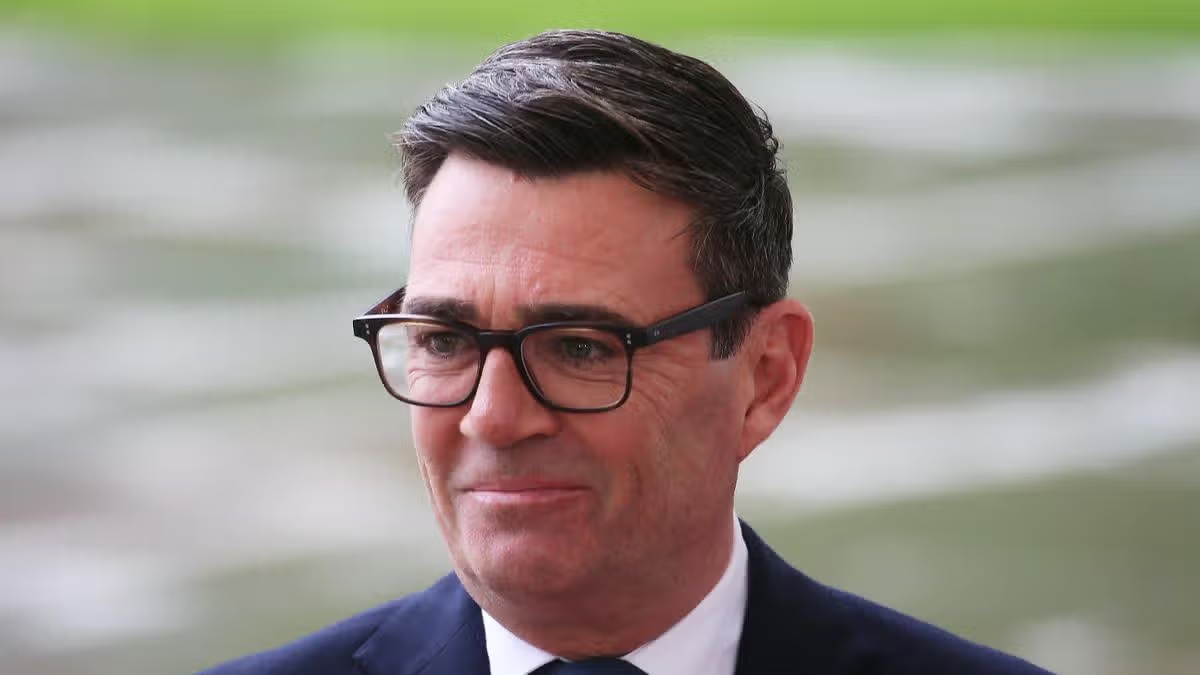
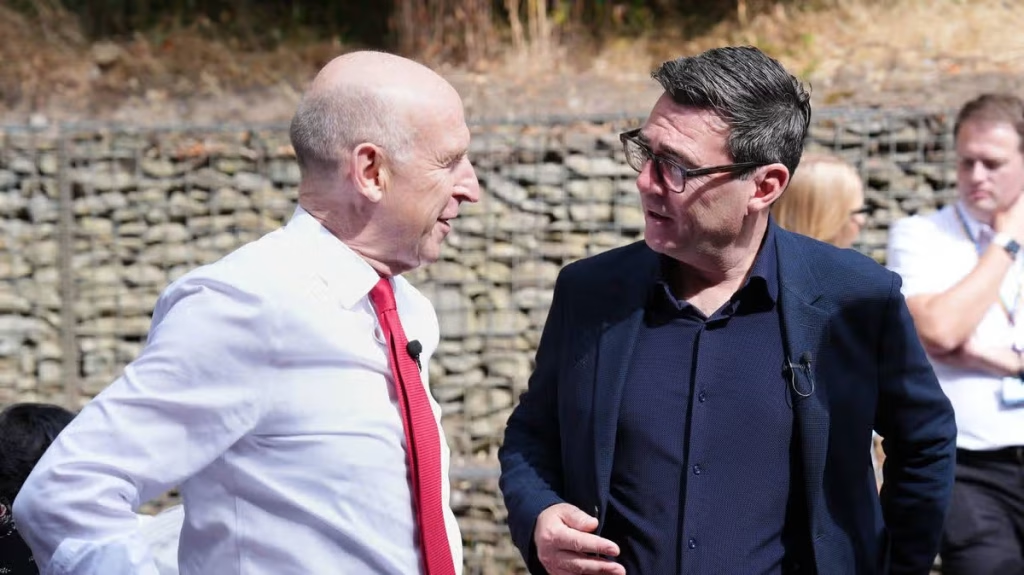
One expert claimed the “walls are closing in” on Chancellor John Healey and PM Andy Burnham ahead of the Budget(Image: POOL/AFP via Getty Images)
The government laid the ground for “tough decisions” in next month’s Budget after it was forced to borrow a worse-than-expected £18.3billion last month.
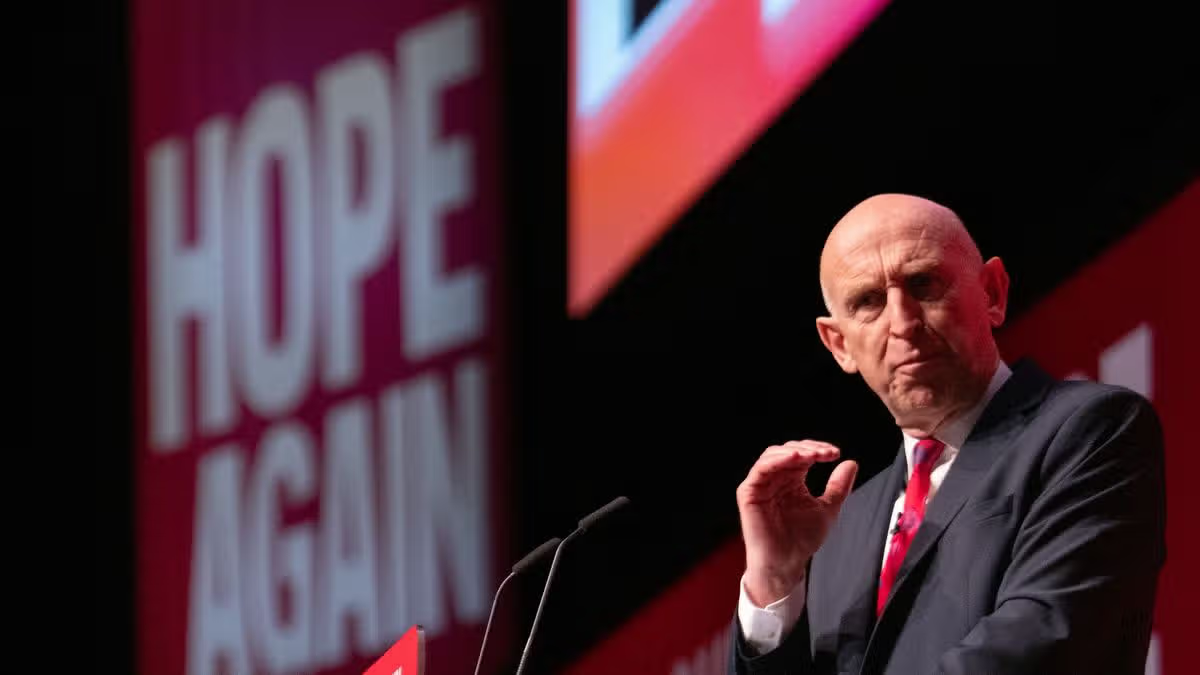
Experts warned tax hikes by John Healey were now inevitable, with fears over what spending cuts could also be on the cards as the Chancellor tries to balance the books.
The challenges facing Mr Healey have been deepened by the global economic fall-out from the Middle East conflict, seven months after US President Donald Trump and Israel went to war with Iran. The impact through higher inflation and government borrowing costs came as PM Andy Burnham prepared for his first face-to-face meeting with President Trump in New York.
Analyst Chris Beauchamp said “the walls are closing in around” the PM and Mr Healey.
Figures from the Office for National Statistics revealed public sector net borrowing rose to £18.3 billion in August, nearly a fifth more than the same month last year, and the second-highest level for any August on record. The total, £3.5billion more than officially forecast, was driven in part by higher spending on the state pension as the overall benefits bill jumped almost 7% to £29.2billion in August.
Anita Wright, from Ribble Wealth Management, claimed the UK is in a “doom loop”. She added: “The pattern is an old one: tax receipts rise, yet spending rises faster, and inflation quietly pushes up both.”
Debt interest payments swallowed another near £9billion – the highest ever for any August on record – as the nation’s public sector debt mountain hovers perilously close to the £3trillion mark.
The Institute for Fiscal Studies says the UK was already on course to shell out half a trillion pounds on debt interest over the next five years, even before the most recent hikes in government interest rates.
Rising debt interest costs are set to create a difficult backdrop for Mr Healey going into his Budget on October 28, as he attempts to prove to bond markets that he is serious about tackling the nation’s deficit.
Chief Secretary to the Treasury, Emma Reynolds, said: “Britain has huge potential to deliver good growth in every postcode, creating jobs, raising living standards and investing in the services people rely on. But we can only deliver that growth with fiscal discipline.
“At a time when debt interest costs billions of pounds that could otherwise be spent on improving lives, we must always know where the money is coming from to pay for public services.
“That is why we are committed to meeting our fiscal rules with a buffer against uncertainty, taking the tough decisions needed to keep the public finances on a sustainable path.”
Since April, the start of the financial year, the government has borrowed £77.3billion. This is £2.2 billion less than over the same period last year, but £8.1 billion more than the Office for Budget Responsibility’s (OBR’s) forecast in March.
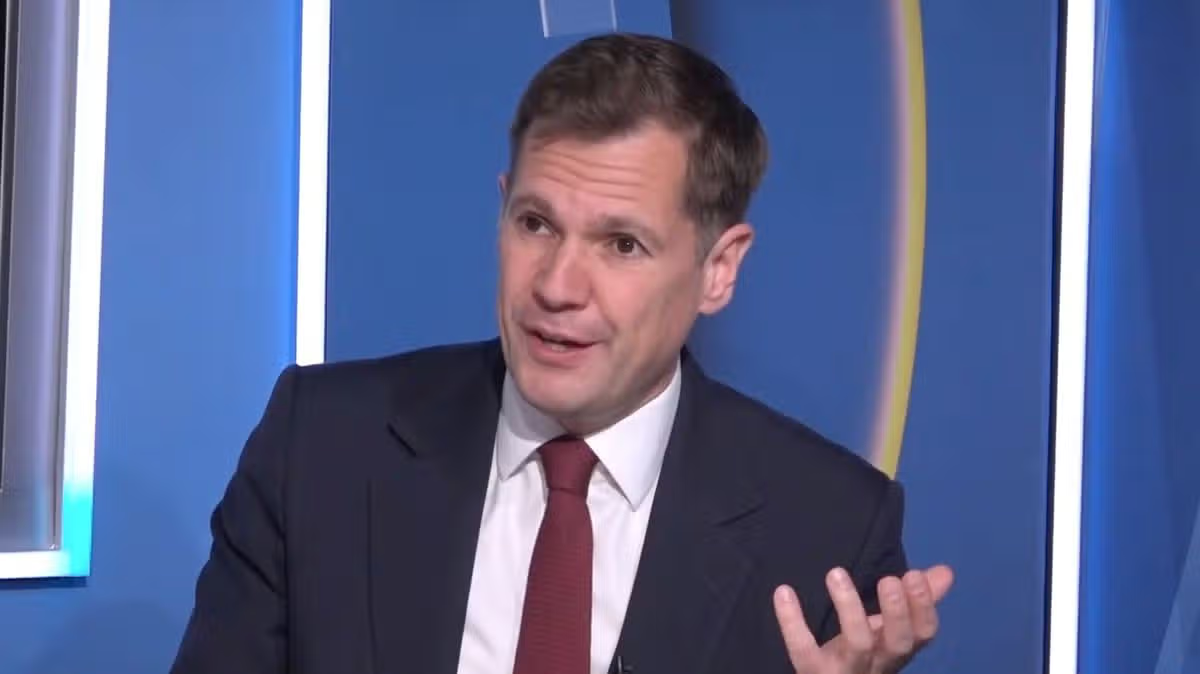
Thomas Pugh, chief economist at audit, tax and consulting firm RSM UK said: “The jump in borrowing in August compared to last year sets the stage for what is likely to be a much trickier Budget than Burnham or Healy anticipated when they came to power just a few months ago. Another round of tax rises in October now looks inevitable.” He added “any additional day-to-day spending, such as on defence or cost of living, will have to be paid for by higher taxes.”
Consultants Pantheon Macroeconomics said: “The Government will also face significantly higher spending pressures if it tries to meet its well-flagged priorities of boosting investment in housing, reforming social care, and increasing defence spending.”
The Resolution Foundation said the Chancellor faced the dual battle of needing to prioritise fixing the public finances while also providing targeted support to families struggling with the cost of living. James Smith, its chief economist, said: “This leaves the new Chancellor with a tricky balancing act – he will need to think carefully about how to help families without fuelling further deterioration in the public finances. Any support should be carefully targeted towards those that need it most.”
Philip Shaw, of Investec Economics, said: “This is an uncomfortable background to the Budget, but not a critical one” He added “some tax increases are virtually inevitable” but pointed out that previous Chancellor Rachel Reeves had a £24billion buffer in the spring which, while potentially now halved, “may help to cushion the extent of tax increases.”