Post-austerity Britain has seen a series of devastating NHS scandals emerge.
The latest shocking investigation found women had their breasts unnecessarily removed at one NHS trust, which outsourced cancer surgery under a “pay per patient” deal.
Shrinking the funding that we as a nation spend on our health meant that things like NHS dentistry and GP services were left on the brink of collapse. Labour has been in power for two years and has made some progress while ending the austerity-era funding squeeze.
The NHS waiting list is finally coming down after increasing steadily for over a decade and a shift towards to treating people in their communities to keep them out of hospitals is underway.
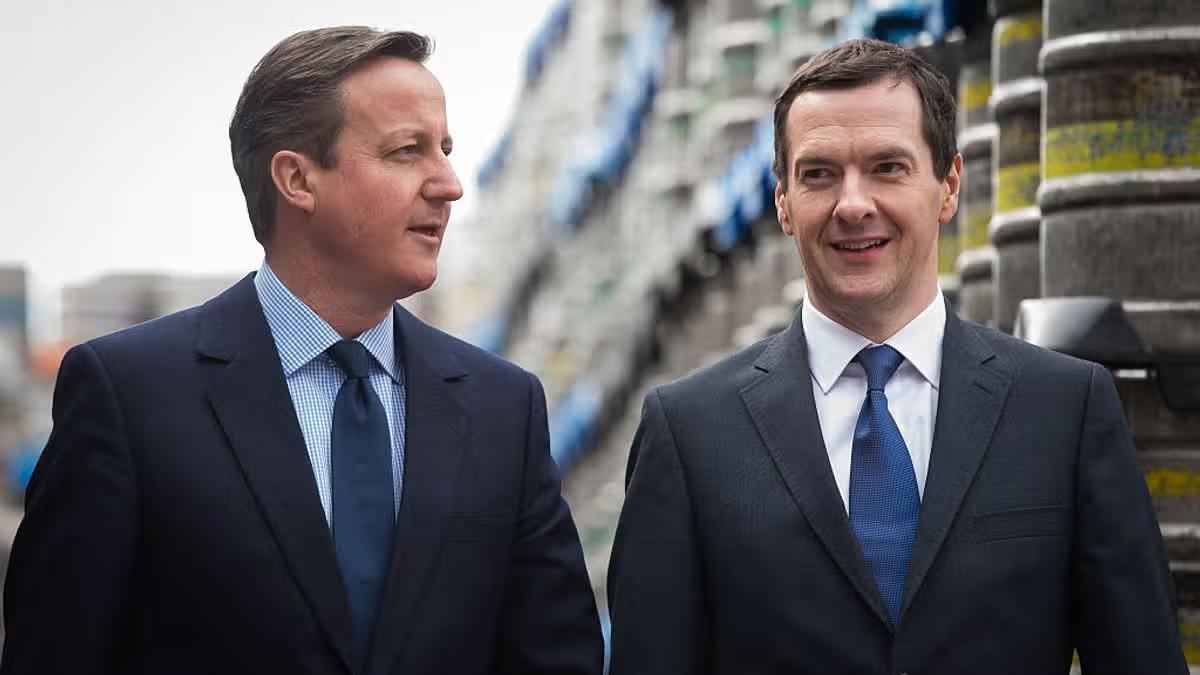
As the NHS juggernaut is starting to turn we look back at some of its worst scandals and crises from the last decade or so, since David Cameron and George Osborne’s Tories launched the worst funding squeeze in NHS history.
To see more of the stories you love from The Mirror just click on the link here to find them at the top of your feed.
The era of austerity
Labour has increased the annual NHS funding settlement following “the most austere decade since the NHS was founded in 1948”.
That was the description given to the 2010s in the landmark Darzi review published in 2024 looking at the health of the nation after over a decade of Tory rule.
The annual rate of NHS funding rises – to keep pace with the ageing population and new technologies – slowed from 6% under New Labour to only 1%. This compared with an average of 3.5% since the NHS was founded in 1948.
While the NHS is a devolved issue, the UK government’s broader austerity policies also constrained public spending available to Scotland, Wales and Northern Ireland under the Barnett formula.
The last spending review gave the NHS in England a 3% funding increase for 2026/27 to 2028/29 – ending austerity era settlements but nowhere near the increases seen during the New Labour period.
A lack of NHS capacity and resources after a decade of austerity meant the Covid-19 pandemic hit Britain harder than other countries.
The halt in NHS capital investment had meant the UK had fewer hospital beds and medics per 100,000 of the population than most comparable developed nations. The NHS had to cancel more routine operations than other similar healthcare systems and is taking longer to recover.
The British Social Attitudes (BSA) shows that when Labour left office in 2010 public satisfaction with the NHS was at an all-time high of 70%. By the time the Conservatives left office in 2024 this was at a record low of 24%.
During this period, a series of scandals and service collapses showed that we could no longer take safe NHS care for granted.
Maternity scandals
Several shocking maternity scandals covering the austerity period identified the same theme of chronic understaffing.
Hundreds of babies died as mums’ concerns were ignored on short-staffed wards, which refused to admit them during labour. Delayed C-sections led to oxygen starvation.
Probes have been held into deaths of mums and babies at maternity units in Morecambe Bay, Shrewsbury and Telford, and East Kent and Nottingham. An ongoing probe is looking into Leeds Teaching Hospitals NHS trust.
After coming to power, Labour commissioned the Amos review into maternity deaths, which are at a 20-year high. It concluded the NHS in England “is no longer fit to consistently deliver high-quality, compassionate care” for all.
This summer, a lack of doctors meant North Devon District Hospital in Barnstaple had to halt deliveries. At least one baby has been stillborn after a pregnant woman had to travel to the next nearest hospital in Exeter, which for some mums in the area is an extra two hour drive.
The closure was supposed to be temporary but came amid concerns that a rise in complex births could see smaller hospitals losing their maternity units, which are consolidated into bigger regional maternity units.
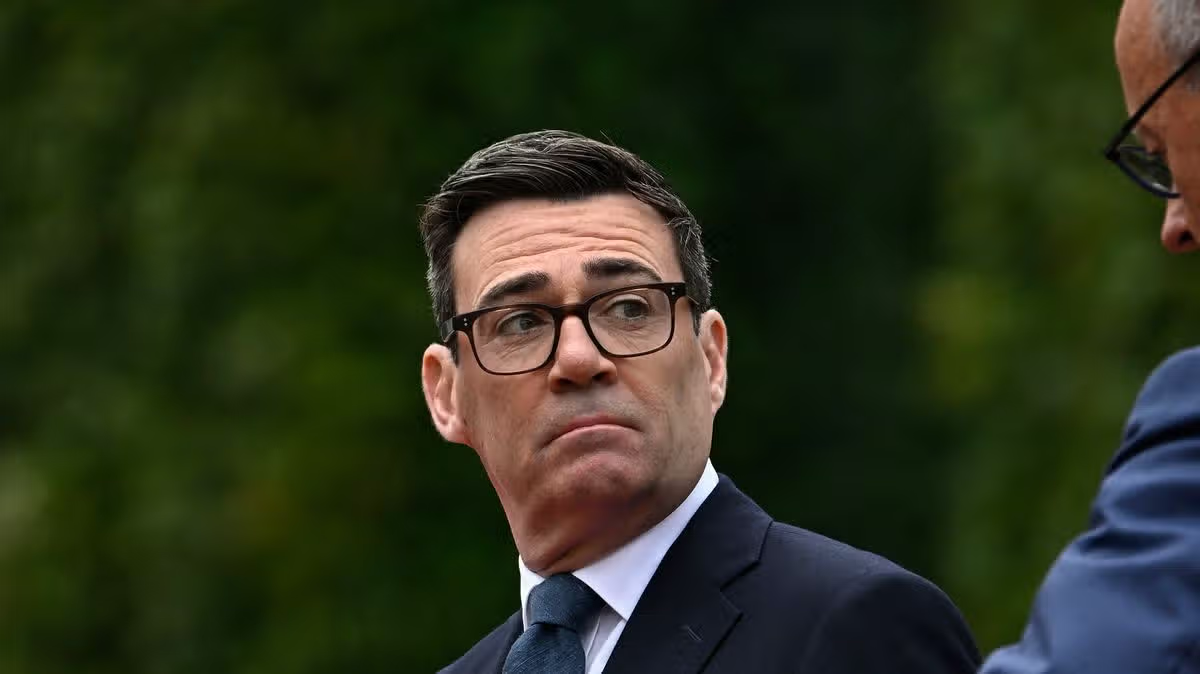
Prime Minister Andy Burnham vowed during his first Prime Minister’s Questions to reopen the suspended maternity unit in Barnstaple.
GP collapse
The Conservative-Lib Dem coalition slashed spending on GP services in England in real terms from 2009/10 to 2013/14.
Funding increased in the second half of the decade, but not enough to keep pace with growing demand. Britain had an ageing population and spending on other health and social care services was still being reduced – resulting in declining population health.
More people turned up needing care at GP practices as average life expectancy fell for the first time since the Second World War. Senior GPs started to retire early due to unmanageable workloads and the number of practice partners dropped by more than a quarter in a decade.
Tory governments made – and broke – election pledges to increase GP numbers. In 2015 the government promised 5,000 more GPs by 2020, and then in 2019 Boris Johnson promised an additional 6,000 GPs by 2024 – but numbers continued to fall.
There was a fall of almost 3% in full-time-equivalent GPs in England between 2015 and 2022. At the same time, the number of patients per GP increased by 9% while total demand, as measured by total chronic conditions, rose by 32%.
GP appointments became much harder to come by and were shorter. Seeing the same GP became a rarity in a system under huge strain. Health conditions worsened and more people ended up in A&E.
The lack of the senior GPs with decades of experience who are the backbone of the service is still a major structural weakness Labour is struggling to tackle.
Dentistry crisis
Most dentists are no longer taking on new NHS patients, and a major report in August concluded that universal access has been “lost”.
An exodus of dentists from the underfunded NHS service created an oral health crisis, which sees more than 20,000 children a year ending up in hospitals needing rotten teeth taken out.
NHS dental funding for England remained at about £3billion for more than a decade under Conservative governments, failing to keep pace with inflation and population growth. By the time the Tories left power, the funding was only enough to fund care for half the population. The British Dental Association (BDA) calculated that they had overseen a £1bn real terms funding cut.
The Mirror launched the Dentists for All Campaign demanding a return of universal access and when Labour came to power it increased the annual budget to £3.5bn for 2024/25. The BDA says an extra £1.5bn is needed to rescue NHS access for all who need it.
Labour has committed to reforming the NHS dental contracts, which sees dentists make a loss on some more complex appointments. However it is unclear whether it will commit the extra funding needed.
Crumbling hospitals
The record NHS funding squeeze during the decade of austerity meant hospitals had to prioritise day-to-day running costs to minimise loss of life.
Hospitals all but halted capital investment in buildings, IT systems and machine infrastructure like scanners. This caused NHS productivity to plummet.
The result of this can be seen today in the outdated hospital buildings up and down the country, where leaks, vermin infestations and ceiling collapses are common. Some 42 hospitals still contain dangerous reinforced autoclaved aerated concrete (RAAC) in danger of collapse.
NHS tech is so outdated that many doctors have to rely on pagers to communicate, and hospitals are one of the only places where you can still find a fax machine.
In the 2019 Conservative Party manifesto, Prime Minister Boris Johnson made the much-ridiculed pledge to build 40 new hospitals by 2030. Many of these “new” hospitals turned out to be planned refurbishments of existing hospital buildings which were already behind schedule.
Had NHS funding matched the average capital health spend in the main 14 OECD nations, the health service would now have an extra £33bn a year.
NHS outsourcing
The hated 2012 Health and Social Care Act was the brainchild of Tory health secretary Andrew Lansley.
While outsourcing was a feature of the New Labour government, the Lansley reforms turbo-charged this and fragmented the NHS, while ushering in the private sector and an era of “competition” between health bodies.
Private hospitals started by cherry-picking relatively simple procedures, such as cataract, hip and knee operations, before taking on some lifesaving surgery, such as removal of cancer tumours.
Many of these were performed on a “pay per patient” basis leading to a shocking scandal where women were found to have had their breasts unnecessarily removed.
An initial investigation at County Durham and Darlington Foundation Trust found 20 breast cancer patients had been given unnecessary mastectomies when there were other options. An independent review found there was a “clear financial incentive” for a private company run by an NHS breast surgeon at the trust to operate on more patients.
The trust said payment per service is not uncommon in the NHS but suspended the practice for breast cancer services at its hospitals. It has expanded its investigation to look at over 4,500 procedures dating back to 2015.