Sixty years ago today when the drama about homelessness, Cathy Come Home, was broadcast by the BBC, it was watched by 12 million viewers and caused a public outcry. Written by Jeremy Sandford and directed by Ken Loach, the documentary-style broadcast, which exposed Britain’s chronic housing shortage, left viewers so shocked and distressed that BBC switchboards were overwhelmed by callers.
The 1966 drama followed the story of Cathy Ward (played by Carol White), who is first seen as a young mum living with her husband Reg (Ray Brooks) in a new flat but becomes homeless and has her kids forcibly removed and put into care by social services and the police. The programme accelerated support for newly formed housing charity Shelter and it also inspired the launch of homelessness charity Crisis in 1967.
Matt Downie MBE, chief executive of Crisis, says: “People were outraged. But six decades later, its themes are as prevalent as ever – and not much has changed. People are living and dying on our streets. There are 1.3 million people on social housing waiting lists.”
To see more of the stories you love from The Mirror and to find them easily in Google then make us your preferred source. Free and easy-to-do, just click on the link here to find more from The Mirror at the top of your feed.
Broadcast again last week on BBC4, the story shows the couple being evicted after Reg has a car accident that leaves him unable to work. With three children, they bounce between temporary accommodation –living in a caravan park, then squatting in a derelict building.
They are forced to separate because of bureaucracy and long council housing waiting lists – with Cathy and the children entering a shelter that forbids husbands. When Reg stops visiting and paying the fees, Cathy is evicted, losing her children and left destitute and alone.
Fortunately, the wide-reaching effects of the drama led to the separation of husbands from their wives and children in welfare hostels being banned. And, eventually, the Housing (Homeless Persons) Act 1977 was brought in. But single mum-of-seven Mechelle Norton, 47, who works with children with special needs, says her own story of homelessness reflects Cathy’s, decades on from the shocking drama.
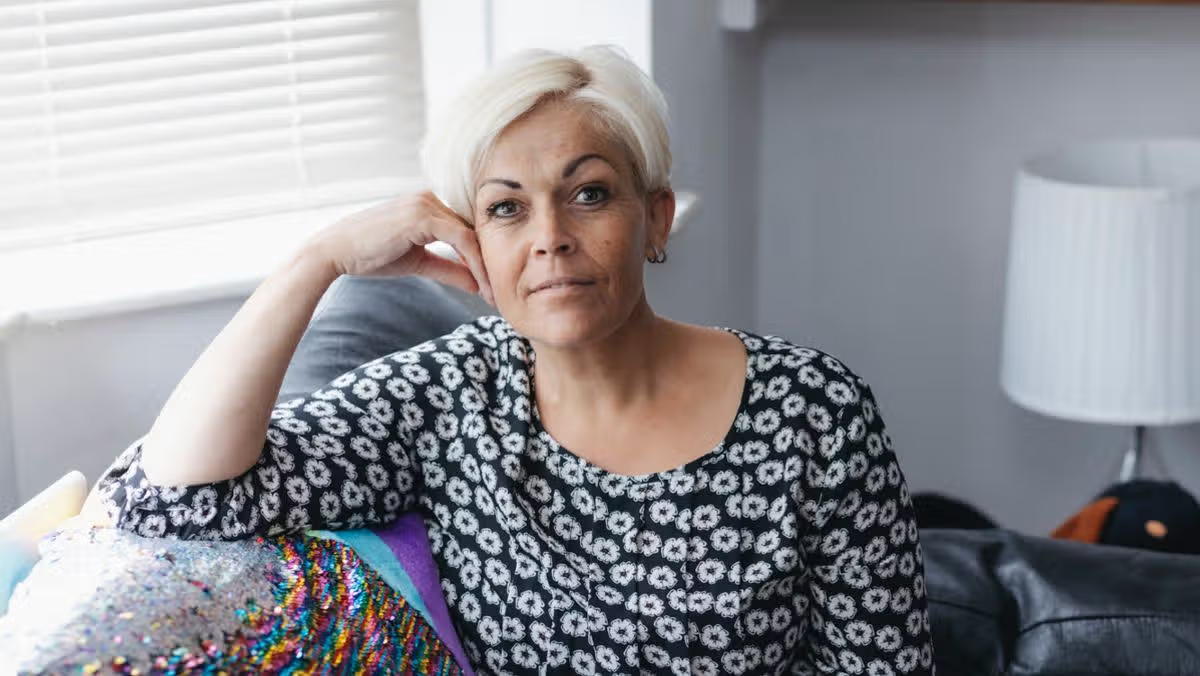
In September last year, Mechelle, from Birmingham, was homeless and living in her car with three of her children. She says: “Homelessness can happen to anyone. I had a home, a job, I even had horses. Life was good. In an instant, wehad nothing.”
Her downward spiral began when she moved from Cornwall to be near her family in the West Midlands. She says: “I was looking for more support for my son, who has a learning disability and epilepsy that causes life-threatening seizures.
“But the arrangement quickly broke down and, because I needed to take time away from work to look after my son, I lost my job. We had nowhere to go, so I moved us into my car – my three youngest children, aged three, five and 12, and our dog. My older children are adults and have their own places.”
After living in her car for a week, when she approached the council for help they initially refused, saying that she was intentionally homeless. Then Crisis fought for her to be given temporary accommodation.
Mechelle says: “I just felt like a total failure. I’d settle my kids down to sleep in the car and cry silently while they slept.” Similarly to Cathy Come Home, she says: “When the children were homeless, we were classed as grade five with social services, which means the children are at risk. I could have lost them. It doesn’t bear thinking about.”
She lived in temporary accommodation until February this year but is now in a privately rented home. Mechelle says: “We had a room with two bunk beds. We had nothing else – just a bag of clothes. The council doesn’t provide bowls and cutlery. Crisis helped with those.”
Her children saw it as a game, Mechelle says, but she still bears mental scars from her experience. She says: “That phrase, ‘you’re only a pay cheque away from homelessness’, is true. I never thought it would be me, until it was.”
Relocating to new premises in Poole in May last year, the new venture struggled. “Soon it became clear we couldn’t afford rent, so we bought a £5,000 campervan that July, taking out a loan,” she says. “We tried to renovate it, but winter came and we ran out of money.”
Left without water, electricity or cooking facilities, she says: “When you remove your basic needs of being able to wash, go to the toilet and you have a two year old… I just couldn’t do it. I declared to the council that we were homeless in November.”
Placed on the housing register, the council gave them a deposit and first month’s rent to get back on their feet. Daisy says: “We lived in friends’ houses until February this year, then moved into our own rented place. Being homeless is so detrimental to your sense of self. I’m still in therapy.” Releasing a children’s book about her experiences next year, she hopes to start a charity to help people who are in similar situations.
Daisy says: “We’re in a much better place now. We’re in an IVA [individual voluntary agreement], paying £130 a month over five years to get out of debt. But we’re proof that this can happen to anyone. It’s frightening the themes of Cathy Come Home are so relevant in 2026.”
The Prime Minister has pledged £900million for homelessness as part of his drive to end rough sleeping, which has been welcomed by Crisis. Mr Downie says: “Andy Burnham’s provided, by some distance, the most clear senior political leadership on the issue of homelessness that we’ve ever seen. That itself is a real change.”
In August, the PM announced immediate action to offer everyone who needs it a route off the streets by Christmas, backed by increased funding of £442m. Commending this progress, Mr Downie adds: “Crisis will help around five and a half thousand people between now and mid-January to try and play our part.”
But he stresses the need for long-term solutions to be addressed – such as building more social housing. He says: “Housing associations, local authorities, or even private landlords need to make sure that people who have nowhere to live get somewhere to live.
“Crisis has set up its own housing company to start providing homes to people, because we just can’t wait any more – the first tenant moved in last week. Secondly, prevention is everything in terms of stopping the flow of people into homelessness.
“People are dumped out of prisons, hospitals, the care system, the asylum system, into homelessness. They have nowhere to go. That needs to change.
“The government has also frozen housing benefit for many years, meaning that people on very low incomes, who need housing benefit to pay rent, just can’t. Less than 2% of the private rented market is affordable on housing benefit.”
He also suggests we adopt a Housing First initiative, like several other countries, which place people in their own homes, rather than temporary accommodation, with intensive support where needed. Mr Downie adds: “Cathy Come Home led to some changes in the 1970s but nowhere near enough.”
*To donate to Crisis, see HERE; you can watch Cathy Come Home on BBC iPlayer.