Covid-19 Inquiry says social care “an afterthought” despite claims by Matt Hancock – after untested residents were sent into care homes where 43,000 people died

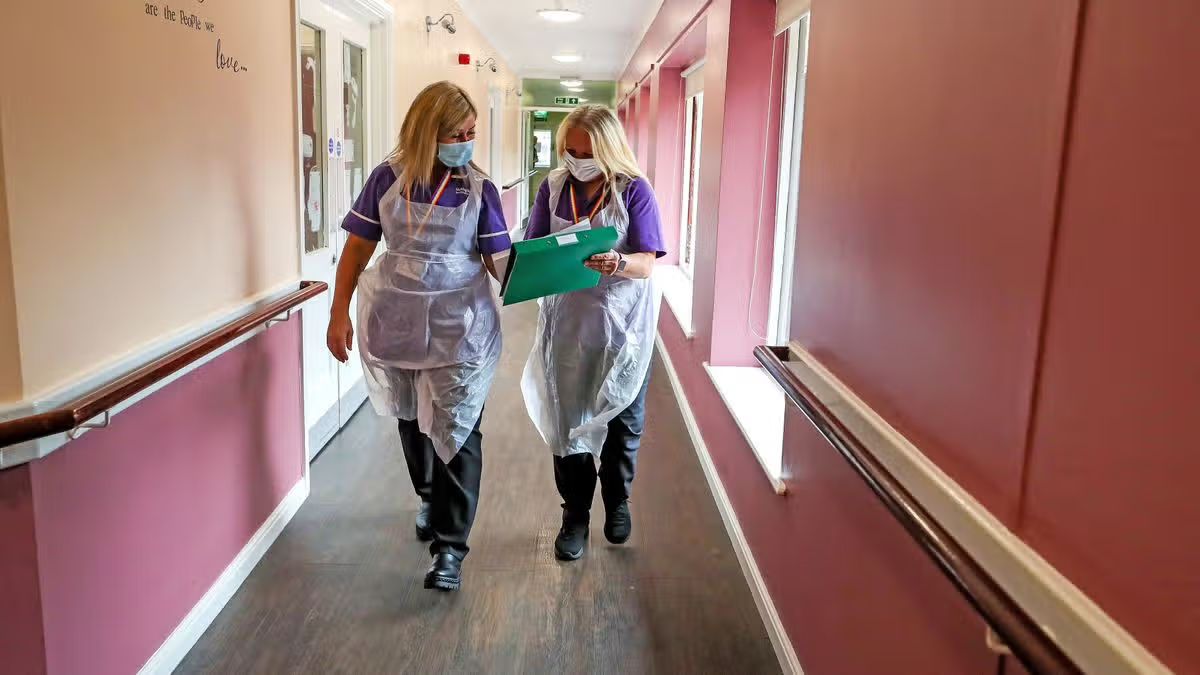
Covid-19 Inquiry finds care workers ‘risked their lives’ in makeshift PPE(Image: PA)
Tens of thousands of care home residents died during the pandemic as the sector was “something of an afterthought”, the Covid-19 Inquiry has found.
The damning verdict of the biggest public inquiry in British history found not enough was done to protect the most vulnerable in care homes which were put at risk to protect the NHS. Untested elderly people were discharged from hospitals into care homes which were not initially advised to keep these residents isolated.
The inquiry’s sixth report on the care sector told how 43,000 people died with the virus in care homes during the pandemic and refuted former health secretary Matt Hancock’s claim to have thrown “a protective ring” around care homes.
To see more of the stories you love from The Mirror just click on the link here to find them at the top of your feed.
Inquiry chair Baroness Heather Hallett said: “At the critical early stages of the pandemic, not enough was done to protect those living and working in care homes.
“The mantra at the time of ‘protecting the NHS’ sometimes came at the expense of the users and providers of care. The adult social care sector as a whole appeared to be something of an afterthought.
“The profound isolation and sense of abandonment felt by residents as a result of the visiting restrictions resulted in immense emotional harm. Most distressingly, some people were not permitted to be with their dying loved ones. Many remain wracked by a guilt that they do not deserve to carry.”
Previous hearings had heard heartbreaking testimony of care home residents’ final moments, scared and confused while unable to be with loved ones.
The report concluded they were left feeling isolated, abandoned and alone as visiting restrictions cut them off from loved ones for months. Visiting restrictions did not begin to ease until the summer of 2020 which caused “profound and enduring effects”.
Baroness Hallett said “many millions of people across the UK receive adult social care”, adding: “For them and the people who dedicate themselves to providing their care, the pandemic totally disrupted their daily lives and had a devastating impact.
“The action taken by the UK government and devolved administrations to try and protect workers and users of adult social care came too late. The failures were the direct result of an absence of proper pandemic planning for the adult social care sector.”
Ultimately the report concluded failures such as lack of Covid tests and PPE were the result of a lack of pandemic planning. It said a pandemic preparedness exercise conducted in 2016 called Exercise Cygnus recommended developing social care surge capacity but this had not been carried out.
Carers
The crisis during the pandemic had a “devastating impact” on the nation’s 1.5 million care workers.
The report highlighted “wholly unacceptable” shortages of personal protective equipment and said “many put their own lives at risk”.
Carers were forced to wear makeshift PPE such as waterproof ponchos from festivals, painters’ overalls or homemade items using bin bags and bed sheets.
As well as lack of kit, the report said the social care workforce was already short staffed, “undervalued and under-recognised” going into the pandemic.
Baroness Hallett said: “The Covid-19 pandemic exposed and exacerbated the underlying fragility of the adult social care workforce. It entered the pandemic with a high number of staff vacancies and staff turnover, and care workers already working long hours for low pay and in poor working conditions.”
Baroness Hallett said many care workers suffered burnout and quit the profession entirely during and after the pandemic.
She also highlighted the impact on the nation’s 5.8 million unpaid carers who were “providing complex care for longer hours with little or no respite”.
‘protective ring’ or ‘generational slaughter’
Top Tory Matt Hancock’s claim to have thrown a “protective ring” around care homes “right from the start” had been labelled a “joke” and a “sickening lie” by bereaved relatives.
The report concluded this “does not accurately reflect the lack of action taken to protect care homes across the UK in March and the first half of April 2020”.
Some 25,000 residents were discharged into care homes from March 17 and April 15, when “care homes received insufficient protection at the time they most needed it”.
During hearings in 2025 a civil servant described the toll as a “generational slaughter within care homes”.
The report said: “Decision-makers were faced with an unenviable choice. They could keep patients in hospital pending tests becoming available and run the risk of running out of hospital beds for Covid-19 patients and increasing the risk to vulnerable patients fit for discharge.
“Alternatively, to free up capacity for Covid-19 patients, they could discharge patients who were potentially Covid-19-positive and run the risk of Covid-19 being introduced to vulnerable residents in care homes.
“Choosing the latter course of action created the perception that hospital capacity was of greater importance to the government than residential and domiciliary care capacity.”
Mr Hancock had told the inquiry it “was a question of what is the least worst solution to this terrible problem”.
Mr Hancock eventually resigned as Health Secretary after being found to have broken social distancing restrictions while having an affair with a co-worker.
The probe noted that he considered the primary responsibility for pandemic planning for care homes was with local councils rather than the government. The report highlights an initial lack of central leadership for the crisis response.
The High Court ruled in 2022 that Government policies on discharging hospital patients into care homes at the start of the pandemic were “unlawful”.
‘Do Not Resuscitate’
The inquiry had heard testimony from bereaved families who said they were not consulted before Do Not Attempt Cardiopulmonary Resuscitation (DNACPR) orders were placed on loved ones.
Baroness Hallett concluded some decisions were made inappropriately or without proper consultation, based on a person’s age, health condition or learning disability. The report found no evidence of national policy encouraging blanket use of DNACPRs.
Baroness Hallett recommends mandatory end-of-life care training for health and social care workers, who her report said often “lacked the skills to have these conversations thoughtfully and compassionately”.
Failure to Prepare
Tory governments in the decade before Covid-19 failed to act on warnings that the social sector was not prepared for a pandemic.
The UK Influenza Pandemic Preparedness Strategy 2011 highlighted “particular challenges” for social care. Pandemic preparedness exercises took place across the UK between 2003 and 2018 to stress-test the UK’s response. One was Exercise Cygnus in 2016 which stressed the need for social care surge capacity.
The report said: “Entering the Covid-19 pandemic, it was well understood that the adult social care sector would be severely tested. The heightened vulnerability to respiratory illnesses of many people who draw on social care, the fragmentation of services across different sectors, and the high turnover of staff all contributed to the sector’s lack of resilience before Covid-19 arrived.
“However pandemic planning had not given adequate consideration to how these risks could be mitigated given the likely impact that a pandemic would have on the sector. Concerns identified… through testing exercises were not addressed.”