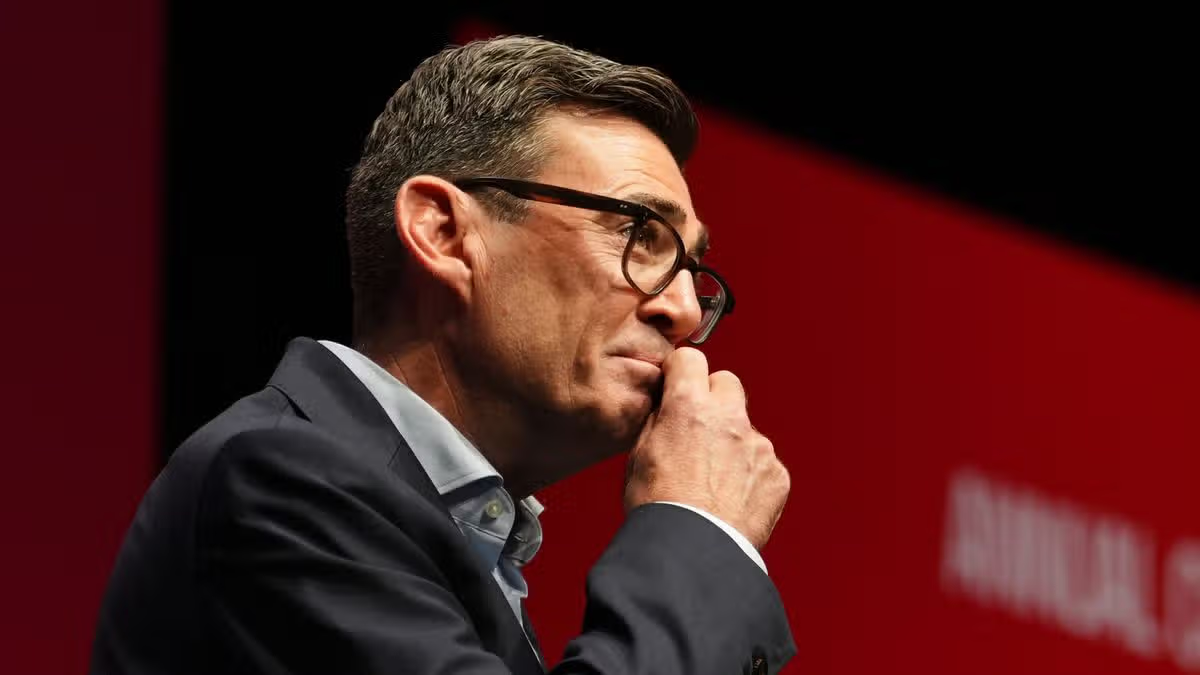
Liberal Democrat MP Tom Gordon has clashed with his own party leader in defence of Andy Burnham’s plans to overhaul the pensions triple lock to fund a National Care Service

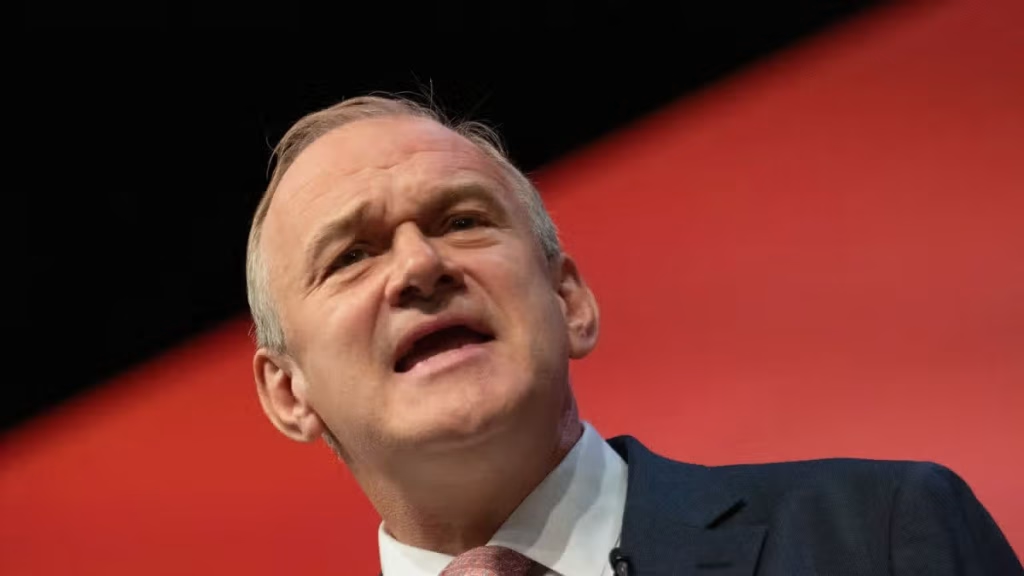
Lib Dem leader Sir Ed Davey defended the pensions triple lock – but one of his MPs disagreed(Image: Gary Roberts/SOPA Images/Shutterstock)
A Liberal Democrat MP has clashed with his own party leader in defence of Andy Burnham’s plans to overhaul the pensions triple lock to fund a National Care Service.
Tom Gordon, MP for Harrogate and Knaresborough, said he thought Sir Ed Davey had “missed the point” and that it was “for the birds” that the state pension trip lock helps millennials.
Lib Dem leader Sir Ed earlier today said changing the triple lock would mean millennials, those aged 30 to 45, would have a “very poor pension” when they retire.
In a post on social media, Mr Gordon wrote: “I listened to Ed Davey on (BBC Radio 4’s Today) this morning, and frankly, I think he missed the point. The idea that we’re keeping the triple lock to help millennials is at best for the birds, and at worst downright insulting. I say that as a millennial.
“The case for the triple lock is a worthy one – stopping pensioner poverty. I want that as much as anyone. But pensioners are now less likely to be in poverty than children or working age adults.
“That money should go where it’s needed most – to everyone in poverty, not just one group. It could help fund free personal care, a policy that would disproportionately benefit older people.”
He added that “intergenerational inequality is already one of the defining injustices of our time”, highlighting how millennials are locked out of the housing market, paying higher taxes and struggling with spiralling student loans.
He added: “Telling millennials we’re keeping the triple lock to help us in 30 years’ time is nonsense… I joined this party because I care about fairness and tackling inequality, and that has to include inequality between generations. This line, and this decision, fails on both counts. Ed needs to think again.”
Lib Dem MP Tim Farron, a former leader of the party, also appeared to suggest Mr Burnham’s policies aligned with the party. He wrote on social media: “Reflecting on the PM’s leader’s speech. It was a cracking piece of oratory. It also included loads of Lib Dem ideas e.g. on social care, Europe and water – this is good news for us as a party and as a country. The task for the Lib Dems is to make sure these are more than words.”
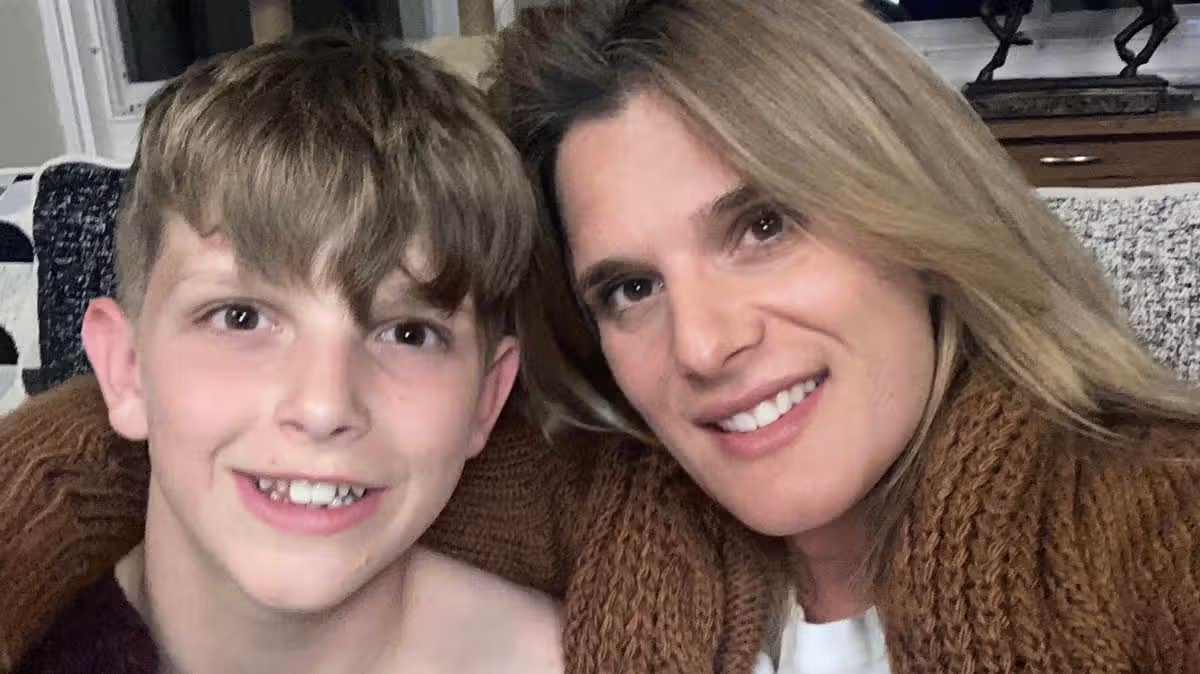
Sir Ed, who cares for his disabled son John, has long been a champion of social care, making it a key plank of the Lib Dems’ policy agenda.
Some Labour MPs were left surprised by his negative response to Mr Burnham’s Labour conference speech on Tuesday, in which he vowed to contest the next election on a pledge to create a National Care Service that would be free at the point of use.
The Prime Minister announced that the social care plans would be funded by ending the triple lock, which guarantees increases to the state pension in line with whichever is highest out of inflation, earnings or 2.5%. The automatic earnings link will be removed.
On Thursday morning, Sir Ed told BBC Radio 4 ending the triple lock could push more pensioners into poverty – and also argued it would impact millennials down the line.
He said: “The way he’s proposing to pay for it, first of all, wouldn’t pay for it, and secondly, it would put more pensioners into poverty. We already have nearly two million pensioners in poverty. This would mean that people are working hard now, the millennials, when they retire, they’d have a very poor pension.”
Sir Ed also criticised Mr Burnham for proposing his plans on the back of the next general election in 2029, which he said was “delaying any action on social care”.
The Lib Dems have proposed paying for improved social care by taxing big banks, closing loopholes in capital gains tax and redirecting some money from the NHS.
Helen Miller, Director of the Institute for Fiscal Studies, said Mr Burnham’s new proposal is “still a triple lock and much better than the old one”. She told Times Radio on Wednesday: “I think it’s actually better thought of as still being a triple lock. The way to think of it is that pensions will be pegged to average earnings. So that’s what they’re going to increase with over the medium run. But in the short run, there is inflation protection.
“So if actually earnings fall below inflation or fall below 2.5%, then the state pension will rise by the higher number. But rather than in the current system, where it kind of keeps ratcheting up so that over a 50-year period, it can become completely unsustainable and the pension can be huge multiples of average earnings, actually, it will be more of a temporary protection.”
She added: “I think pensioners can feel reassured that under the new plan, they wouldn’t fall behind the working age population. In fact, they’d be better off because they would have this inflation protection that the earners don’t have.”