EXCLUSIVE: Work and Pensions Secretary Pat McFadden’s comments to The Mirror come ahead of two imminent reviews into the benefits system in a huge moment for the government
Britain’s welfare state needs a “big reset”, Pat McFadden has said as the government looks to the Danish model for inspiration.
The DWP chief’s comments in an interview with the Mirror come ahead of two imminent reviews into the benefits system in a huge moment for the government.
They include Alan Milburn’s long-awaited report into the thorny issue of almost one million young people between the ages of 16 and 24 classed as ‘Neets’ – those not in employment, education, or training – in the next fortnight.
It will be closely followed by Sir Stephen Timms’s verdict on reforming the main disability benefit – Personal Independence Payments (PIP) – which has been labelled not fit for purpose.
Mr McFadden said: “I’m looking for a big reset of the [welfare] system through the two reports that we’re going to receive.”
He added: “I think it’s a big moment. I think it should be seen as asking a really big question about how the welfare state should work in the 21st century.”
The Work and Pensions Secretary – who will bring forward proposals to Parliament in 2027 on reform – added that a distinct system for younger people had “merits”.
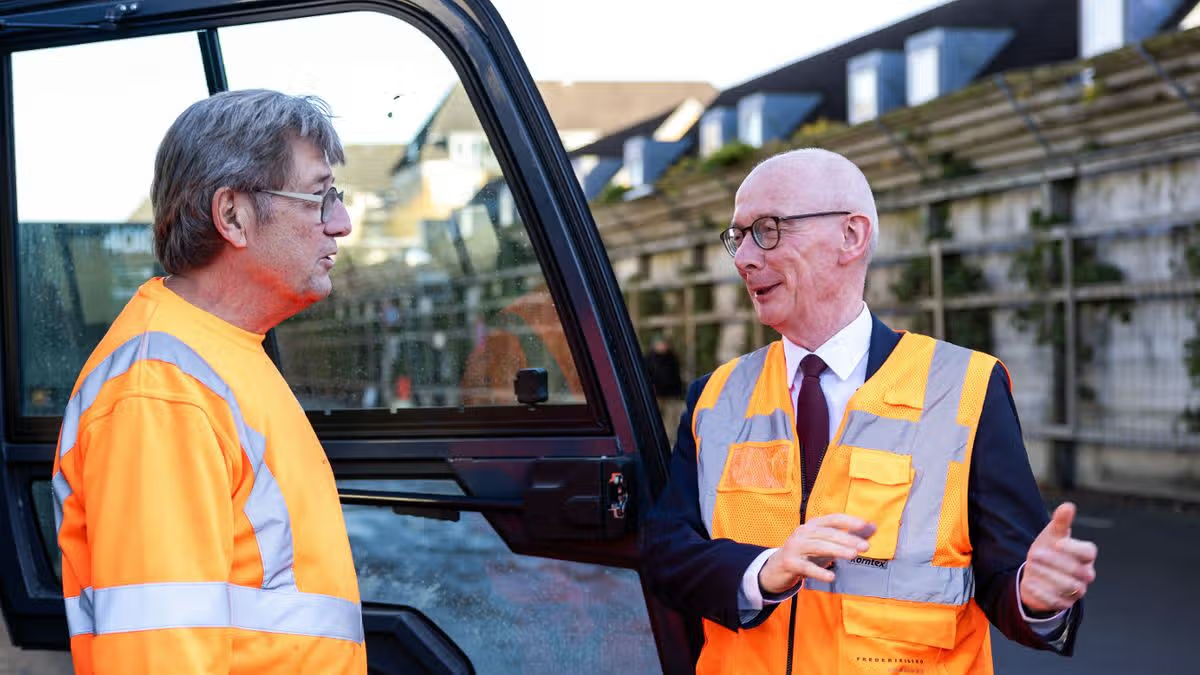
He was speaking as he visited Denmark’s capital, Copenhagen, to examine the country’s flagship “fleksjob” programme. The state subsidised scheme provides part-time work opportunities for its citizens, including those who are disabled or suffering from ill-health.
The Scandinavian country now has one of the highest disability employment rates in Europe – increasing from 44% to 61% between 2012 and 2024.
Mr Milburn’s report into the ‘Neets’ crisis is due to recommend introducing a Danish-style “flexi-job” scheme in the UK to help disabled young people.
But Mr McFadden said on the visit he had been “really struck” by the scheme helping all age groups return or stay in the workforce.
He said: “The system is certainly not just for young people, and I think there’s a big lesson there.
“Yes, we’ve had a big discussion focused on Neets in the UK, but the idea of asking ‘what can you do, how can we help you live the fullest life’ shouldn’t stop at the age of 24 or 25.”
One of those on the flexi-job scheme at the Frederiksberg Kommune, who Mr McFadden met with this week, was 49-year-old Tenja Poulsen.
She does the “odd jobs” including the workers’ laundry on the site, which collects rubbish, removes graffiti and is responsible for maintaining the roads in the region.
Ms Poulsen, who was diagnosed with bipolar disorder in 2010, has worked around 17 hours on-site for around a decade.
She told The Mirror: “Being a part of something… colleagues, and friends now, is so important for my life. I am capable of showing I am more than a diagnosis.
“I am more than a piece of paper.”
Another worker, 64-year-old former police officer Claus, said: “I broke down mentally. I suffered from anxiety, depression, and heart failure.
“So I had to quit the force – 13 years ago. And I went on sick for about two years.”
But he has now been working around 12 hours-per-week on the scheme for over a decade, saying: “I feel like I can contribute to society – it’s a win-win situation.”
Pressed on the Danish scheme, Mr McFadden said: “I don’t think you can ever simply lift and shift everything from one country to another.
“I’ve been to the Netherlands this year as well and learned certain things there.
“I don’t think everything that’s done in Britain is always going to be wrong; there’s some things that we’re doing that are right. But I think there are lessons you can learn, and I’ve come here to learn from this.”
Denmark also largely restricts access to its “disability pension” to those over the age of 40 – with some exceptions.
Pressed on whether the UK would consider such a model, Mr McFadden said: “You can have a discussion about age, but I think a distinct system for younger people has merits for one very simple reason – if you’re young, you have your whole life in front of you.
“So the choices that you’re able to make and maybe the way you’re channeled one way or another by the state at a young age has a longer-term impact on your life.”
But Denmark spends around 2% of its GDP on work support schemes – compared to just 0.3% in the UK – according to a recent DWP report.
It would mean billions of pounds in extra cash to match Danish levels of support.
Mr McFadden said: “Well, we’ve started [investment].
“We’re putting £2.5billion in over the next few years. There is more investment in employment support for long-term disabled people of all ages through Pathways to Work. So I agree that you need to invest, and we are doing that.”
He added: “Look, there’s always an argument and a discussion about money.
“I get that, and I’ll do whatever I can in the forthcoming spending review to make the case for investment in these things, but that will become clearer in time.”
But in order to reform the system, Andy Burnham ’s new government will have to win the support of Labour MPs, who last year torpedoed ex-PM Keir Starmer ’s attempts to cut £5billion from PIP payments.
Mr McFadden said: “I think we have to turn the page on what happened last year.
“I hope we’re having a different conversation now about what the system is for.
“Are we spending too much on consequences and not enough on opportunity? How can we change that equation? Where should we really be putting our effort?
“I think since Andy Burnham became Prime Minister there’s been an added dimension to that discussion about what the national government should do and what should be done locally through mayors or other forms of local government.
“So I think it is a different discussion. But when the [welfare] reports come out, we will bring forward legislative proposals next year, and of course Parliament is going to have to decide on them.
“I’ll make the case, but you’re right: ultimately, Parliament will have to decide.”
The Work and Pensions Secretary insisted the debate over welfare in the UK was too often focused on “pick your level of cuts and tell me what you’re going to do”.
But he said of the government’s plans: “It’s not going to work like that. What we’re going to have to do is change the way the system works so that it gives people a future, not just an income.”