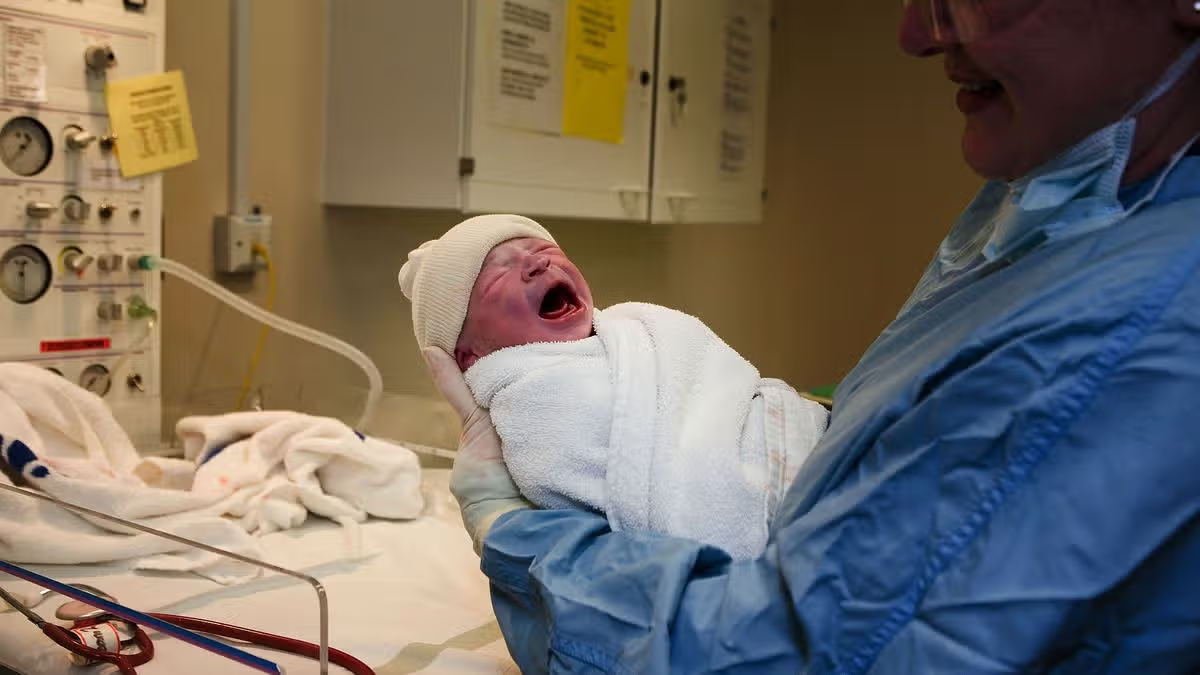
An NHS leader has warned that the current state of maternity services across the nation was “not fit for purpose” as he warns some birthing units could be forced to shut due to a lack of resources and key staff

Some smaller maternity units could be at risk, a NHS chief has warned(Image: Getty Images)
Nearly two dozen maternity units could be forced to shut in England to protect the safety of babies and mothers, an NHS leader has warned.
The NHS Alliance, an independent group which represents health managers, warned that some smaller units will have to close as it said the current system was “not fit for purpose”. The director for acute care at the NHS Alliance, Matthew Hopkins, even predicted that up to 20 of England’s 155 maternity units could be at risk.
This comes as the Mirror previously revealed babies have been born in ambulances and mums taught to give birth in cars at a Devon hospital after the birthing wing was temporarily shut.
To see more of the stories you love from The Mirror and to find them easily in Google then make us your preferred source. Free and easy-to-do, just click on the link here to find more from The Mirror at the top of your feed.
The NHS Alliance said the pressure has been put on smaller units as services as they “increasingly struggle to ensure adequate staffing and availability of operating theatres and beds in outdated, decaying buildings”. The group added that the risk to safety at these organisations was a “daily challenge”.
Maternity units at risk of closure, according to the NHS Alliance, are mostly those in rural and coastal areas that typically deliver between 1,500-2,000 babies a year. A steep rise in women having C-sections and a widespread lack of consultant obstetricians has led to questions being raised over the viability of smaller birthing units.
Up to 20 maternity units across England could be forced to close due to these pressures, according to The Guardian. Mr Hopkins said the “way maternity care is delivered has moved on”.
He said: “Difficult decisions lie ahead, consolidating maternity services to support safer, more sustainable care. Local plans must involve NHS leaders, clinical staff, patients and communities.
“Local and national politicians have a key role to play. They must have the courage to make the case for patient safety, offering air cover for change. We know this can be done. But it is difficult, and local NHS leaders need that support.”
Mr Hopkins added that recent problems at North Devon District Hospital were “not a one-off”. The hospital temporarily shut its maternity unit on August 11 due to staff shortages but this forced local expectant mothers to travel two hours to the nearest unit.
In October, the Mirror revealed that since the closure two babies have been born in the back of ambulances, two were delivered in A&E and another arrived in a hospital reception. One baby died after a pregnant woman was forced to make the gruelling journey to Exeter alone, to find out that her baby was stillborn.
Pregnant women in the region have even been offered classes on how to give birth in a car while driving along the motorway or parked on the hard shoulder. Antenatal teacher Catherine Mchomvu, who runs the sessions, previously told the Mirror: “Birth can happen very quickly for some women – so I’m teaching them positions to potentially slow labour down, essentials for the car.”
The NHS Alliance added that difficult decisions were “inevitable in the interests of patient safety and to address deep-rooted inequalities, including significantly worse outcomes in deprived communities and raised maternity mortality rates for Black and Asian women”.
Mr Hopkins said that politicians had a “key contribution to make” to ensure patient safety. He added: “It is time now to take a step back and consider how we should best organise maternity services across England, and where those services should be located. It is vital that the forthcoming maternity and neo-natal action plan looks beyond tokenistic measures to address these key strategic concerns.”
A Department of Health and Social Care spokesperson told the Mirror: “Every woman deserves safe maternity care, and the Secretary of State has made this issue a personal priority. Through the National Maternity and Neonatal Taskforce, that she is chairing, this government will deliver the reforms needed to ensure services meet the needs of women and families now and in the future.
“In addition, we have invested £271 million since April 2025 to tackle critical safety risks in maternity and neonatal units, we are creating the first ever statutory maternity and neonatal commissioner, we are extending Martha’s Rule to maternity and neonatal wards in England, and we will publish a single, national action plan in December 2026, driving the long-term reforms we need to deliver safer and better care for all.”