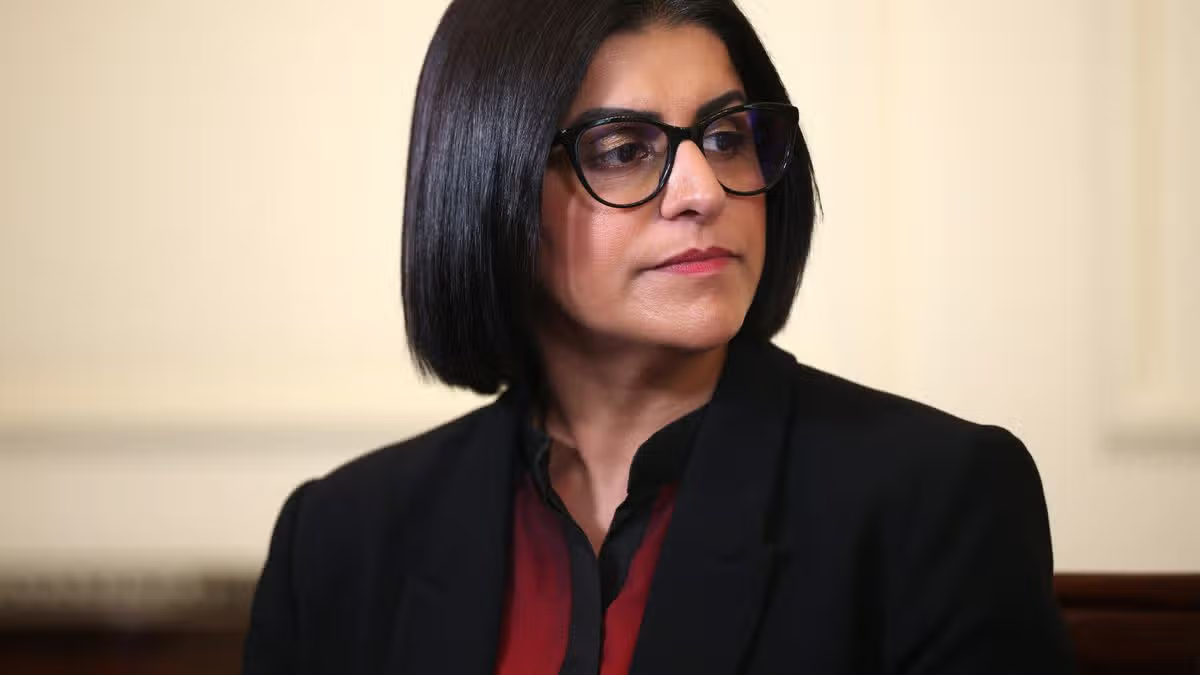
Baroness Jacqui Smith, the minister for skills, said she was ‘sorry’ access to her books will be limited but insisted the proscription of Palestine Action came after a ‘careful process’

Sally Rooney, 35, is the author of bestselling novels Conversations With Friends and Normal People(Image: Getty Images)
An education minister has defended a block on the sale of Sally Rooney’s books in the UK over her support for banned protest group Palestine Action.
Baroness Jacqui Smith, the minister for skills, said she was “sorry” access to the Irish author’s books will be limited but insisted the proscription of Palestine Action came after a “careful process”.
Ministers have faced pressure over the ban of the protest group, which began on July 5 and made membership of, or support for, the direct-action group a criminal offence punishable by up to 14 years in prison. Supporters of the group have staged regular protests in defiance of the Government’s ban, leading to hundreds of arrests – including of an 83-year-old woman on the first day of Labour’s conference in Liverpool.
Ms Rooney, 35, author of the bestselling novels Conversations With Friends, Normal People, Beautiful World, Where Are You? and Intermezzo, previously said she would donate earnings from her books and BBC adaptations of novels to Palestine Action. The group has a stated goal of “ending global participation in Israel’s genocidal and apartheid regime”. As a result, Ms Rooney’s publisher Faber said it could no longer sell her novels in Britain.
Asked for her reaction, Baroness Smith – whose department is trying to boost reading levels – told Sky News: “Sally Rooney is a great writer, and I’m sorry if there won’t be as much access for people to her books, but government’s first responsibility is to the security of the country. A detailed and careful process was gone through by government in order to proscribe Palestine action.
“Just to be completely clear, Sally Rooney or anybody else can continue to protest in support of Palestine. They can continue to support organisations that support Palestine. Many of us do do that. We just don’t believe you should do it through an organisation that, through a careful process, the government has proscribed.”
She added that she can “do what she likes in Ireland”, where Palestine Action are not proscribed.
Asked if it was right that her books aren’t sold in the UK if proceeds will go towards Palestine Action, Baroness Jacqui said: “What I think is right is that the UK government, as its first responsibility, takes action on security where we believe that that is being impacted by an organisation, as the very careful process that the Home Office went through suggested it had been. That has consequences. This is one of those consequences.”
In a statement on Wednesday, Ms Rooney said: “After a process of consultation and deliberation, and with my full agreement, my publisher Faber has therefore determined that it can no longer supply my work within the UK. I have made every effort to be honest with the public about my beliefs and intentions, and I am wholly prepared to accept the consequences.”
In September 2025, Ms Rooney cancelled a trip to London to accept the Sky Arts Award for literature over concerns she could be arrested if she entered the country over her support for Palestine Action.
Palestine Action co-founder, Huda Ammori, said: “Sally Rooney being unable to publish her work in the UK marks a new low in the escalating assault on free speech caused by the proscription of Palestine Action.
“A world-renowned author fearing arrest and being forced to remove her books from our bookstores, exposes the chilling consequences of this authoritarian law, which has been used to make over 3,700 arrests for simply holding seven word signs.
A Home Office spokesperson said: “The proscription of Palestine Action followed a rigorous and evidence-based decision-making process, endorsed by Parliament. The Court of Appeal found that Palestine Action carried out acts of terrorism, celebrated those who took part in them and promoted the use of violence.
“The proscription of Palestine Action does not affect lawful protest in support of the Palestinian cause, which remains a fundamental democratic right.”